
Double Feature Recommendations

For the past few months, I’ve been amusing myself by coming up with double feature ideas, films that would be interesting to view and discuss in tandem. Since I enjoy doing it so much, I thought I’d share my list and explain why I’ve made each pairing. I’ve sought to be specific enough that my choice is understandable but vague enough to avoid spoilers. If you’d prefer, you can skip my commentary and just look at the recs. Enjoy!
Blue Velvet (1986) dir. David Lynch and The Cook, The Thief, His Wife, and Her Lover (1989) dir. Peter Greenaway
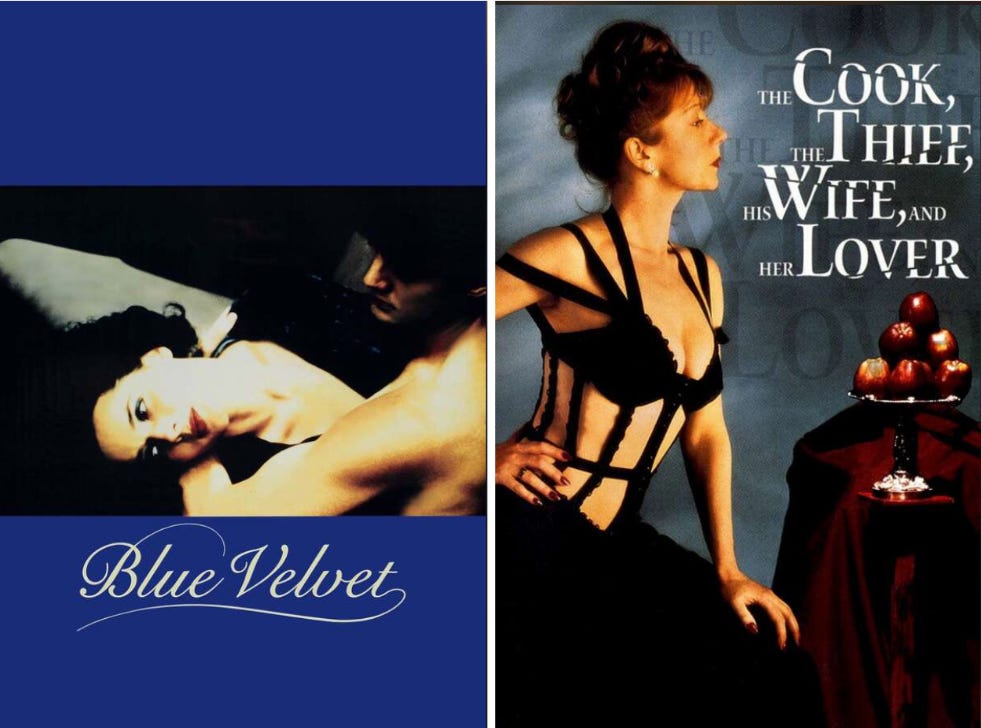
These films are associated in my mind not only due to their similarities but also because I first watched them within a month of each other. They are linked primarily by their villains, Frank and Albert, bizarre criminals who abuse the women in their lives. Beyond that, both films are products of the 80s. Lynch’s idealized depiction of small-town America masks corruption and patriarchal violence, certainly reflective of the Reagan era. The Cook, The Thief, His Wife, and Her Lover is more explicitly a political work, as director Peter Greenaway has made no secret of his antipathy for Margaret Thatcher. While the film is not solely a satire, its themes of excess and consumerism still serve to critique the culture of neoliberalism ushered in by Thatcher and her compatriots.
There are differences as well, of course. Blue Velvet’s main character is Jeffery; he gets caught up in the lives of Frank and Dorothy, who become stand-ins for the Oedipal father and mother. The film is thus a Freudian psychodrama about a young man coming of age. On the other hand, Georgina, the abused wife of Albert, is the main character of The Cook, The Thief, His Wife, and Her Lover, making the film’s focus quite different. Its psychological landscape is perhaps also psychoanalytic, but far more corporeal than Blue Velvet’s, concerned with the relationship between food, excrement, and carnal passion.
Altered States (1980) dir. Ken Russell and The Fly (1986) dir. David Cronenberg
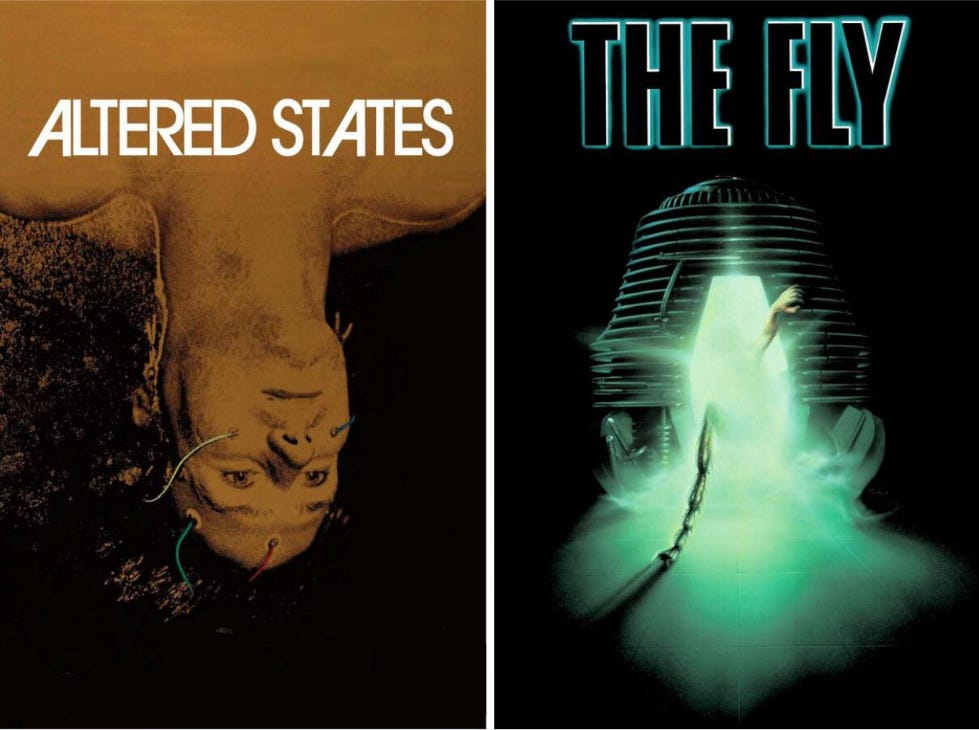
Excellent offerings from excellent directors. There isn’t much to say about these two: they’re body horror sci-fi films about the limits of scientific exploration. The filmmaking of both is peerless, though they employ different techniques to different effects. At core, they are love stories as well, though their endings diverge—but I shan’t say more on that.
Marat/Sade (1967) dir. Peter Brook and The Death of Yazgerd (1982) dir. Bahram Beyzai
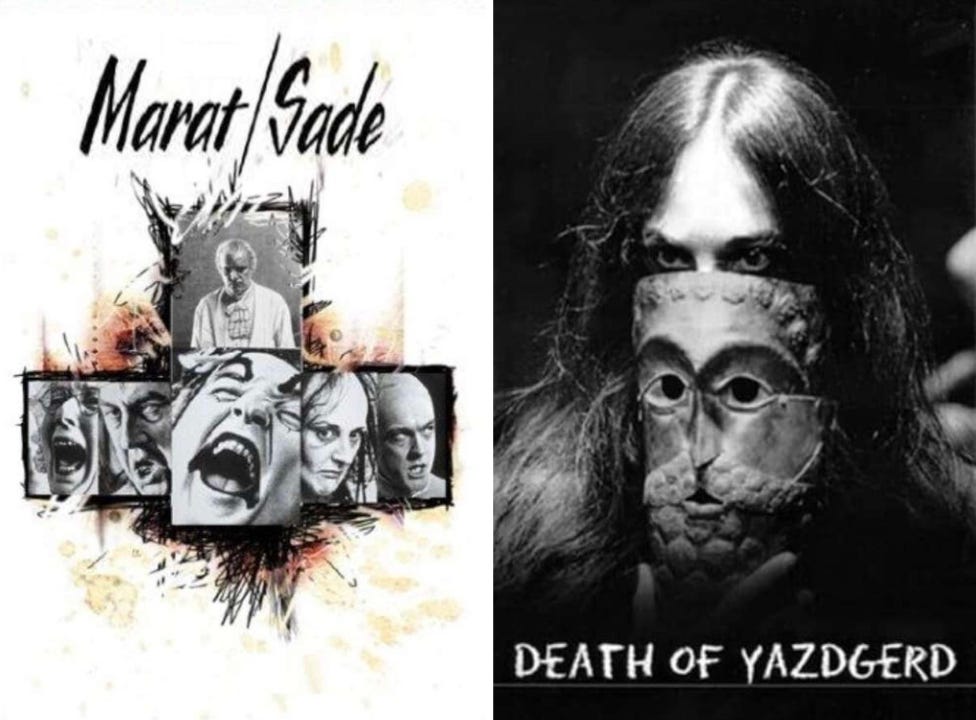
Both of these films are direct adaptations of plays, though neither is simply a filmed stage production. Marat/Sade has the higher budget, but The Death of Yazgerd is just as inventive in using filmic elements to bring its story to the screen.
Their commonalities don’t end there. Both are historical/political films in which characters are playing other characters. Marat/Sade’s full title is The Persecution and Assassination of Jean-Paul Marat as Performed by the Inmates of the Asylum of Charenton Under the Direction of the Marquis de Sade, which about sums it up. The Death of Yazgerd follows a poor miller, his wife, and their daughter as they are interrogated by the retainers of the Shah Yazgerd, the final ruler of the Sassanid empire, who has been found dead in the miller’s hut. In hopes of staying execution, the family acts out the Shah’s final moments, and though the facts of his death remain shrouded in mystery, other truths are revealed through their performances.
While these films explore similar themes, they take different approaches. The Death of Yazgerd is more straightforward, a Shakespearean-esque drama with a grand tone. Marat/Sade is more satirical, more cynical, and may hit closer to home as its subject matter is more relevant to today’s world. Both films are dialogue-heavy, but in unique ways: The Death of Yazgerd is performed in “pure” Persion, pre-Arabic influence, while Marat/Sade’s actors often break into song or rhyming dialogue.
The Duke of Burgundy (2014) dir. Peter Strickland and The Lobster (2015) dir. Yorgos Lanthimos
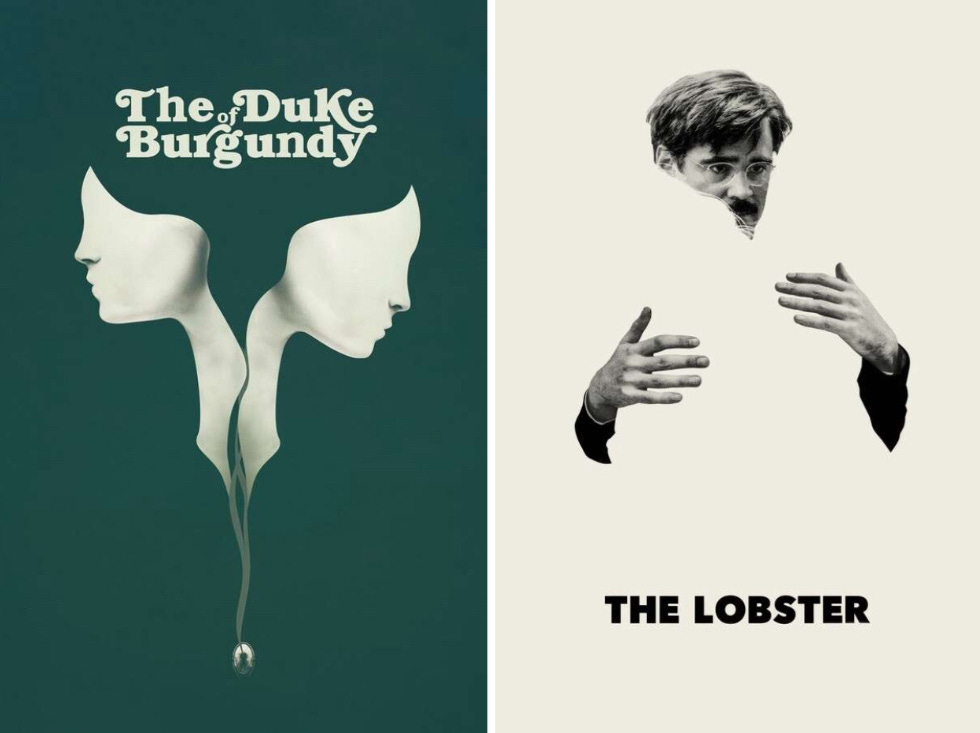
Released within a year of each other, these films are set in absurdist alternate worlds which reflect on dating and romance in the modern age. The Lobster presents a binary between forced compatibility, required partnership, and total independence, mandatory singleness. The Duke of Burgundy focuses on interpersonal relationships rather than social structures: the BDSM dynamic at its core works as a metaphor for the games people play when they’re in long-term relationships. It’d be easy to say that The Lobster is comedic where The Duke of Burgundy is erotic, but both films got laughs out of me.
Slaughterhouse-Five (1972) dir. George Roy Hill and Jacob’s Ladder (1990) dir. Adrian Lyne
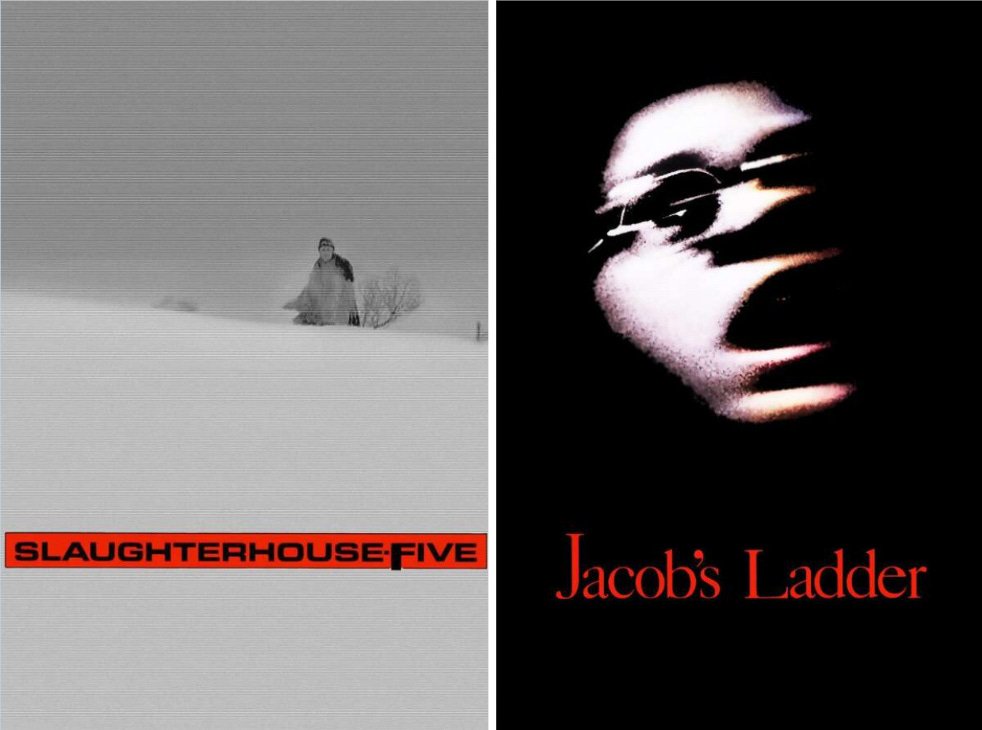
Here we have two American war films with non-conventional approaches to their subject matter; neither is action-driven, but instead they focus on the disconnect between wartime and peacetime. Slaughterhouse-Five follows an American soldier in WWII who survives the bombing of Dresden and uses science fiction tropes to allegorize his experience; the story is told in a non-linear fashion as he becomes “unstuck in time.” The juxtaposition of his life during the war and his life after the war helps the audience to grasp how difficult it is for soldiers to adjust to civilian life, and the surreal quality of the storytelling may be more effective in conveying the horror of war than a straightforward drama.
Jacob’s Ladder came out around two decades later and is concerned with the aftermath of the war in Vietnam. Classified as a horror film, its main character, a veteran, sees a sinister plot around every corner—but he may be right to be paranoid. This film deals with the way that America treats its soldiers and veterans in just as allegorical a fashion as Slaughterhouse-Five, but at less of a remove, and therefore it may be the more emotional viewing experience.
La Haine (1995) dir. Mathieu Kassovitz and Attack the Block (2011) dir. Joe Cornish
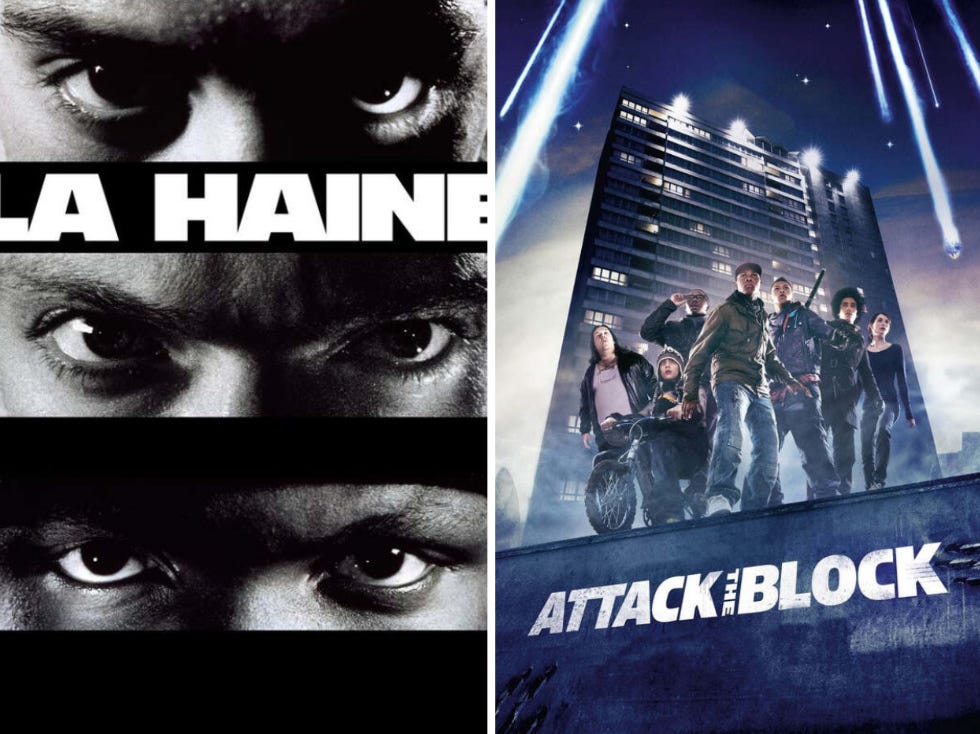
Cinephiles may turn their nose up at this combination, as La Haine is an award-winning realist drama, while Attack the Block is a fairly mainstream sci-fi action flick. But since I first watched La Haine, the two have been connected in my mind. Though their genres may differ, they cover the same subject matter, following multi-ethnic friend groups as they navigate life in public housing blocks in major European cities. One is set in Paris, the other in London; one deals with street violence, the other with alien invasion—but aside from those minor differences, they’re really quite similar!
Being real, while La Haine is ultimately a more serious film, I don’t think Attack the Block is far behind. Its social commentary is more indirect but no less sincere, and though it may be more hopeful, when you look at the story as a whole, it is rather grim. I first saw the film when it came out in 2011, and its themes of alienation, disenfranchisement, and responsibility have stuck with me since. I recommend watching La Haine first and then following it up with Attack the Block to take off some of the edge.
Persona (1966) dir. Ingmar Bergman and Mulholland Drive (2001) dir. David Lynch

This double feature is a no-brainer on a thematic level, but a bit of a hard sell in terms of watching experience. Both films concern strange, mirrored relationships between women, which are used to reflect on the nature of the self, desire, and fantasy. Though this is strange to say, Bergman’s Persona is actually more of an experimental film than Lynch’s Mulholland Drive; though it takes a bit of work, one can piece together a cohesive narrative out of the latter. I’m not sure the same is true of the former. Persona is also a whole hour shorter than Mulholland Drive, so it doesn’t get too frustrating in its impenetrability. If you have the time and patience, sit down for this mind-bending four-hour double feature experience.
Mishima: A Life in Four Chapters (1985) dir. Paul Schrader and Naked Lunch (1991) dir. David Cronenberg
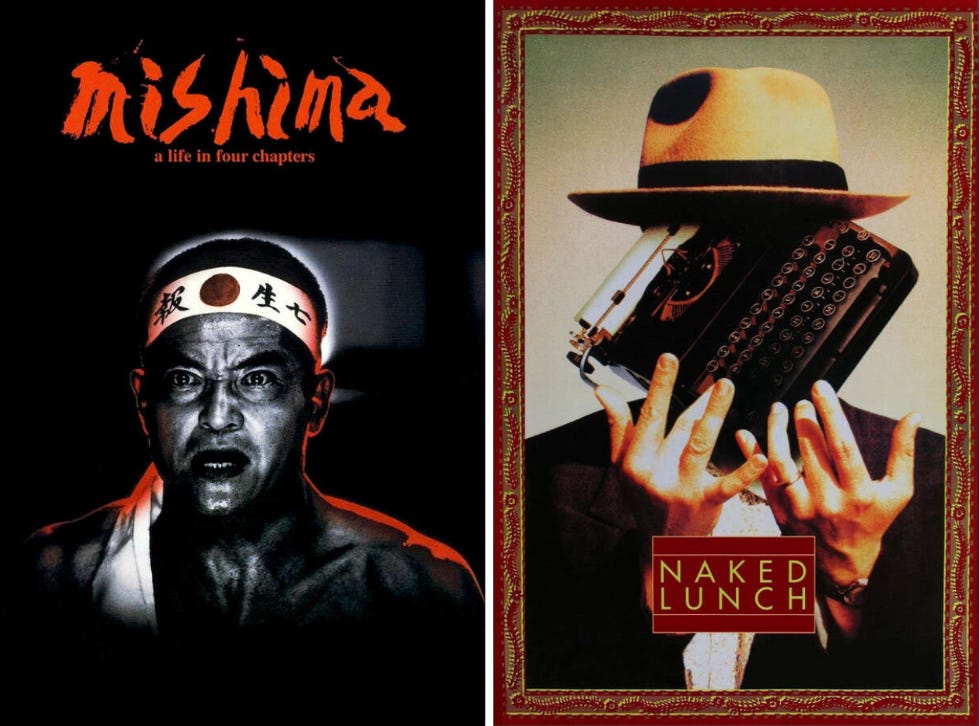
I originally watched these films as a double feature, Naked Lunch first. On reading reviews of the film, I saw comparisons to Mishima and decided to make it my next movie.
Both of these films are part book adaptation, part author biography. Naked Lunch, the book by William S. Burroughs, is an anti-novel, a nonlinear collection of ideas which are only loosely connected. It was considered unadaptable, but fans were impressed by Cronenberg’s handling. Essentially, he took elements from the book and used them to reflect on the life and personality of Burroughs himself: his addictions, his paranoia, and his troubled relationship with his own sexuality.
Mishima: A Life in Four Chapters adapts parts of three books by Mishima Yukio, as well as directly depicting episodes from his life. It is less humorous and more dramatic than Naked Lunch, using set design and cinematography to reflect Mishima’s sensibilities.
The endings of these films are worthy of comparison. Without spoiling anything, I’ll say that both of them create a strong sense of inevitability: after watching, you have the feeling that Burroughs and Mishima’s lives were dominated by certain themes which they were powerless to escape, playing out over and over again until they finally fulfilled their destinies.
What Ever Happened to Baby Jane (1962) dir. Robert Aldrich and Musarañas (2014) dir. Juanfer Andrés and Esteban Roel
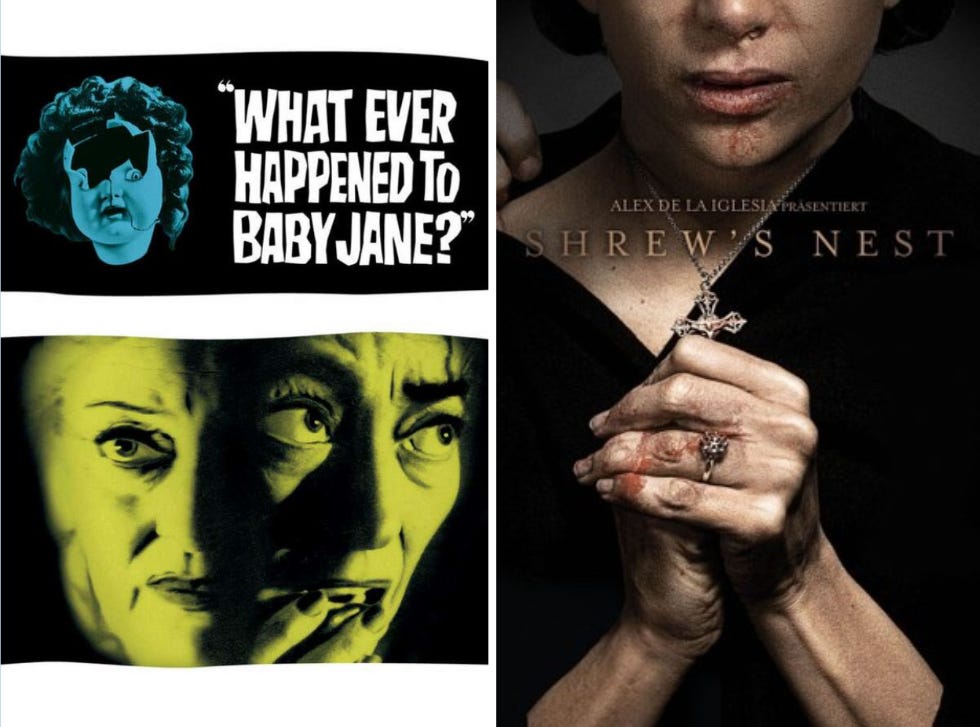
What Ever Happened to Baby Jane is a classic Hollywood film which most people have at least heard of, if only vaguely, while Musarañas is a relatively obscure Spanish film released a half century later. Though separated by time and location, the films have remarkably similar stories, making it seem likely that the latter was inspired by the former.
Both films center on a pair of sisters who live together and hardly ever venture out into the wider world. What Ever Happened to Baby Jane is a story in the style of Sunset Boulevard (1950) (another potential double feature), an early example of the public fascination with what happens to stars once they fade from public view. Its sisters are at odds due to their history as performers, a history which is elaborated on over the course of the film. The sisters in Musarañas have their own history and dynamic, and the film is just as careful to conceal certain information from the audience until the last moment. Both films feature incredible performances from their lead actresses, as well as outstanding endings which elevate them to new emotional heights.
The Stepford Wives (1975) dir. Bryan Forbes and Get Out (2017) dir. Jordan Peele
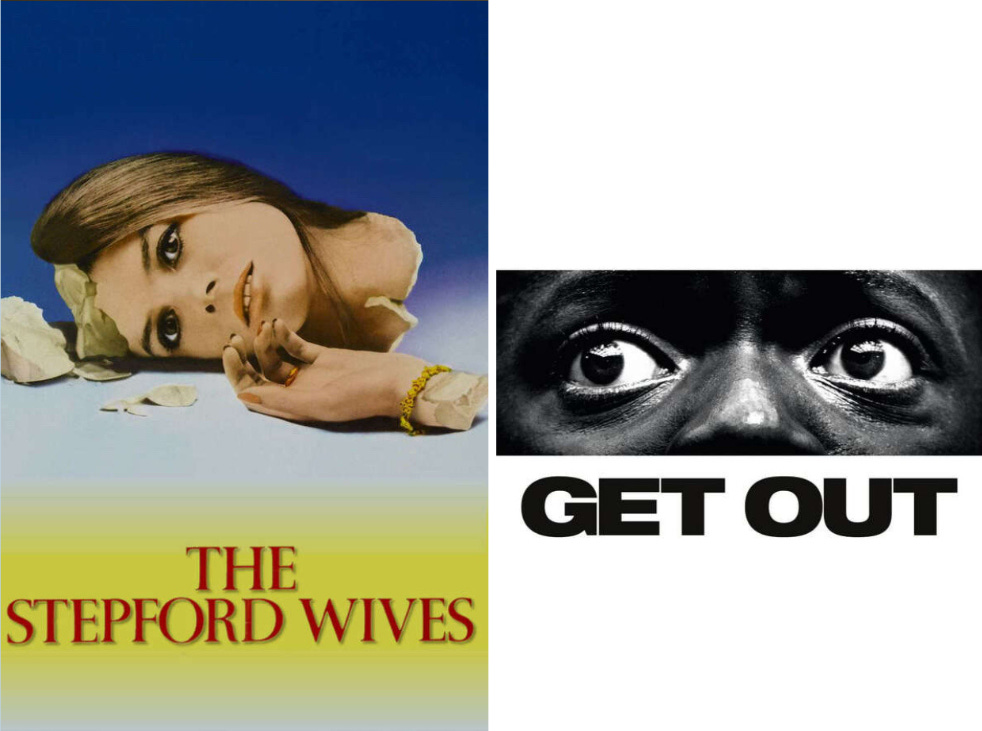
This pairing is an obvious choice, as Get Out was directly inspired by The Stepford Wives. The Stepford Wives was released in the 70s and explores backlash to the feminist movement. A young couple moves to the town of Stepford, and the wife, a talented young photographer, feels there’s something eerie about the place. No man in the movie is trustworthy, as a husband can turn against his wife with just the tiniest bit of prodding.
Like The Stepford Wives, Get Out uses a surreal horror set up to explore its themes, this time the racial politics of the 2010s. Another photographer, a young black man, is invited to meet his white girlfriend’s family. Underneath their welcoming veneer, the family is masking sinister intentions. Get Out may be the more powerful of the two films, as it handles more complicated psychological dynamics, but it has a markedly different ending than The Stepford Wives, one which might divide audience opinion.
Savage Messiah (1972) dir. Ken Russell and Mahler (1972) dir. Ken Russell
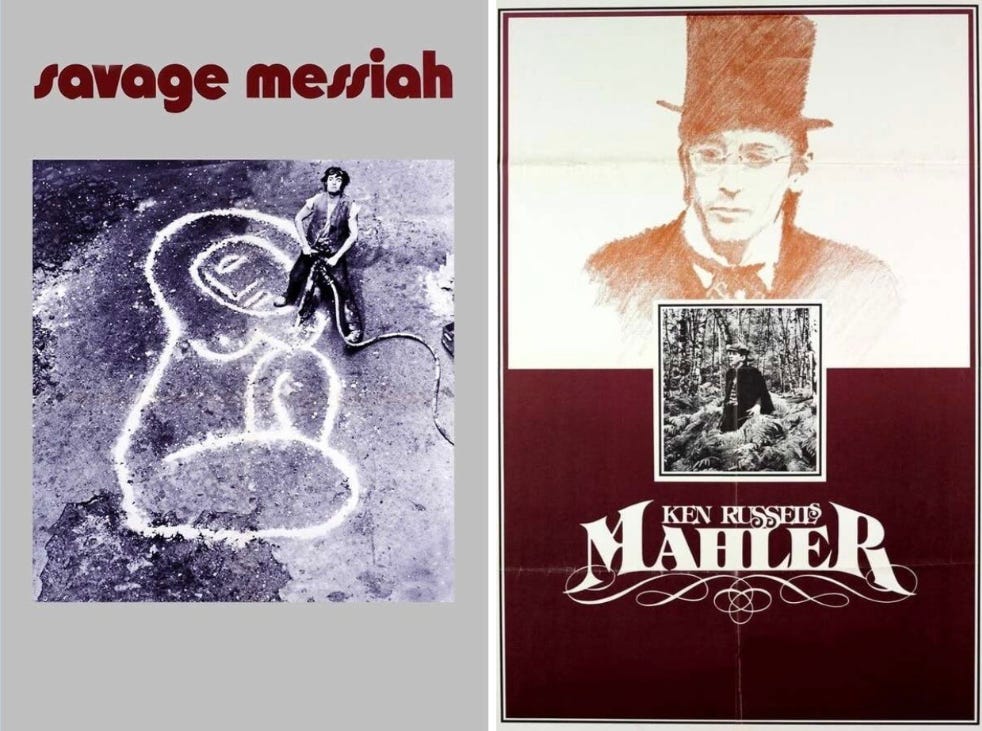
This is another set of films that I originally watched as a double feature. It’s also the only entry on this list where both films were directed by the same person. What can I say, I’m a Ken Russell lover.
Many of Russell’s films would work as double features, since he returned to the same themes across his career. I do think these work particularly well together: both are biopics which depict the lives of male artists and their female counterparts. The women were artists themselves, but neither received any appreciation, either during life or in death. In the case of Savage Messiah, the sculptor Henri is significantly younger than his muse, Sophie, while Mahler is around two decades older than his wife, Alma.
Aside from these relationships, I would say that both films deal with the nature of art and death. Their handling of these themes is quite different, since they reflect the mentalities of the artists they focus on.
Merry Christmas, Mr. Lawrence (1983) dir. Ōshima Nagisa and Joint Security Area (2000) dir. Park Chan-wook

My newest pairing and one I’m quite pleased with. Both films center on national conflicts—Merry Christmas, Mr. Lawrence on a WWII POW camp where Allied soldiers are held by the Japanese, and Joint Security Area on a dispute between North and South Korea over an incident at the DMZ.
They’re linked in my mind due to their respective tragedies. These are stories about people who are divided from one another, whether they want to be or not. I also have an interest in male-dominated settings and found exactly the kind of homosocial/homoerotic dynamics I look for in these films.
Merry Christmas, Mr. Lawrence deals with unequal power dynamics and culture clash, while the conflict depicted in Joint Security Area had only existed for around 50 years at the time the film was made, meaning that the characters could potentially be relatives and not even know it. The endings of these films are interesting to assess in terms of their differencing contexts.